Malware attack
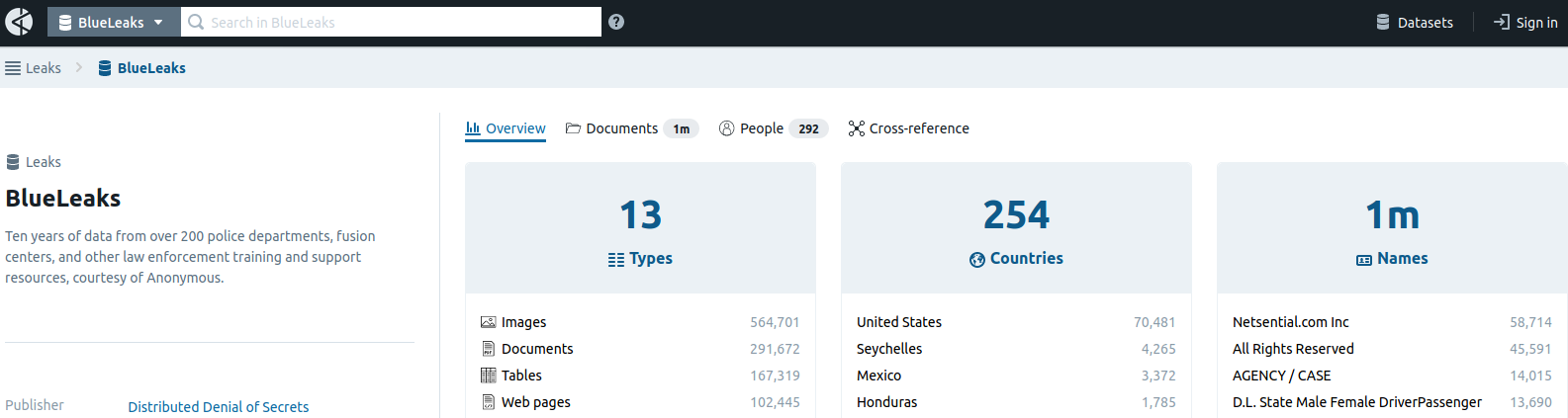
‘BlueLeaks’ Exposes policeHundreds of thousands of potentially sensitive files from police departments across the United States were leaked online last week. The collection, dubbed “BlueLeaks” and made searchable via a new website by the same name, stems from a security breach at a Texas web design and hosting company that maintains a number of state law enforcement data-sharing portals online.
The collection — nearly 270 gigabytes in total — is the latest release from Distributed Denial of Secrets (DDoSecrets), an alternative to Wikileaks that publishes caches of previously secret data.
In a post on Twitter, DDoSecrets said the BlueLeaks archive indexes “ten years of data from over 200 police departments, fusion centers and other law enforcement training and support resources,” and that “among the hundreds of thousands of documents are police and FBI reports, bulletins, guides and more.”
Fusion centers are state-owned and operated entities that gather and disseminate law enforcement and public safety information between state, local, tribal and territorial, federal and private sector partners.
KrebsOnSecurity obtained an internal June 20 analysis by the National Fusion Center Association (NFCA), which confirmed the validity of the leaked data. The NFCA alert noted that the dates of the files in the leak actually span nearly 24 years — from August 1996 through June 19, 2020 — and that the documents include names, email addresses, phone numbers, PDF documents, images, and a large number of text, video, CSV and ZIP files.
“Additionally, the data dump contains emails and associated attachments,” the alert reads. “Our initial analysis revealed that some of these files contain highly sensitive information such as ACH routing numbers, international bank account numbers (IBANs), and other financial data as well as personally identifiable information (PII) and images of suspects listed in Requests for Information (RFIs) and other law enforcement and government agency reports.”
Source : ‘BlueLeaks’ Exposes Files from Hundreds of Police Departments
Mots-clés : cybersécurité, sécurité informatique, protection des données, menaces cybernétiques, veille cyber, analyse de vulnérabilités, sécurité des réseaux, cyberattaques, conformité RGPD, NIS2, DORA, PCIDSS, DEVSECOPS, eSANTE, intelligence artificielle, IA en cybersécurité, apprentissage automatique, deep learning, algorithmes de sécurité, détection des anomalies, systèmes intelligents, automatisation de la sécurité, IA pour la prévention des cyberattaques.
Bots et IA biaisées : une menace silencieuse pour la cybersécurité des entreprises Introduction Les…
Cloudflare en Panne : Causes Officielles, Impacts et Risques pour les Entreprises Le 5 décembre…
Introduction La cybersécurité est aujourd’hui une priorité mondiale. Récemment, la CISA (Cybersecurity and Infrastructure Security…
La transformation numérique face aux nouvelles menaces Le cloud computing s’impose aujourd’hui comme un…
Les attaques par déni de service distribué (DDoS) continuent d'évoluer en sophistication et en ampleur,…
Face à l'adoption croissante des technologies d'IA dans les PME, une nouvelle menace cybersécuritaire émerge…
This website uses cookies.