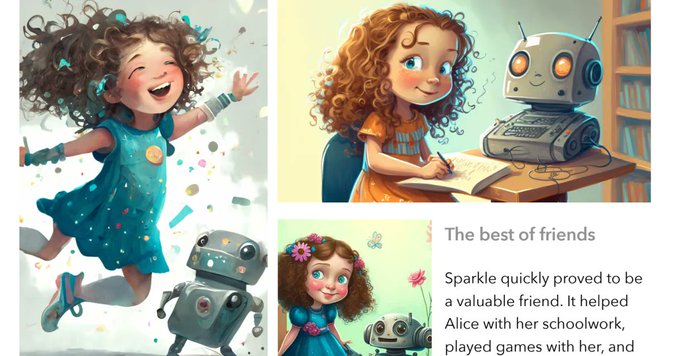
Using ChatGPT and Midjourney, Reshi generated drafts of text and illustrations that would stitch together a story that would show the magic of AI to children, as he put it. Both programs, free for at least a trial period, require the user to type prompts that then refine them by regenerating images or text.
The end result is impressive to anyone unfamiliar with AI but often far from perfect: Images tend to appear with strange anomalies — in Reshi’s case, crooked eyes and 12 fingers — and text created by ChatGPT can have quirks and errors that remind us that AI is not quite human. Reshi spent hours refining prompts and editing text generated for the book, and he rejects the criticism that all he had to do was “hit a button.”
Mots-clés : cybersécurité, sécurité informatique, protection des données, menaces cybernétiques, veille cyber, analyse de vulnérabilités, sécurité des réseaux, cyberattaques, conformité RGPD, NIS2, DORA, PCIDSS, DEVSECOPS, eSANTE, intelligence artificielle, IA en cybersécurité, apprentissage automatique, deep learning, algorithmes de sécurité, détection des anomalies, systèmes intelligents, automatisation de la sécurité, IA pour la prévention des cyberattaques.