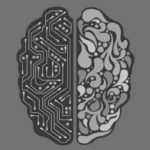

If you think that hiring data scientists or deploying machine learning algorithms makes your organization an AI-driven company, you may be completely wrong. Indeed, you may be anything but AI-driven.
To be totally straightforward, in the scenario above, you may be like one of those retailers that, back during the .com bubble, thought it had become a « web-driven company » simply by creating a web portal, maybe with some e-commerce. Those retailers, indeed, remained « classical retailers, » but with a web portal. In those cases, they hadn’t done what was required to become web-driven, such as embracing dynamic pricing, transforming logistics, decentralizing decisions and reorganizing operations (much like Amazon).
Similarly, becoming an AI-driven company is a top strategic endeavor. It’s a cultural change. It’s a people challenge. And it requires changes in many fundamentals of your organization. Here are my perspectives and learnings on this from the field.
AI-Driven Strategy
First, becoming AI-driven means associating your core strategy and competitiveness with the usage of data and AI. Your strategy must be underpinned by a thorough, up-to-date data acquisition strategy. After all, AI is intelligence derived from data. So, data should be your very first focus for becoming AI-driven.
Mots-clés : cybersécurité, sécurité informatique, protection des données, menaces cybernétiques, veille cyber, analyse de vulnérabilités, sécurité des réseaux, cyberattaques, conformité RGPD, NIS2, DORA, PCIDSS, DEVSECOPS, eSANTE, intelligence artificielle, IA en cybersécurité, apprentissage automatique, deep learning, algorithmes de sécurité, détection des anomalies, systèmes intelligents, automatisation de la sécurité, IA pour la prévention des cyberattaques.