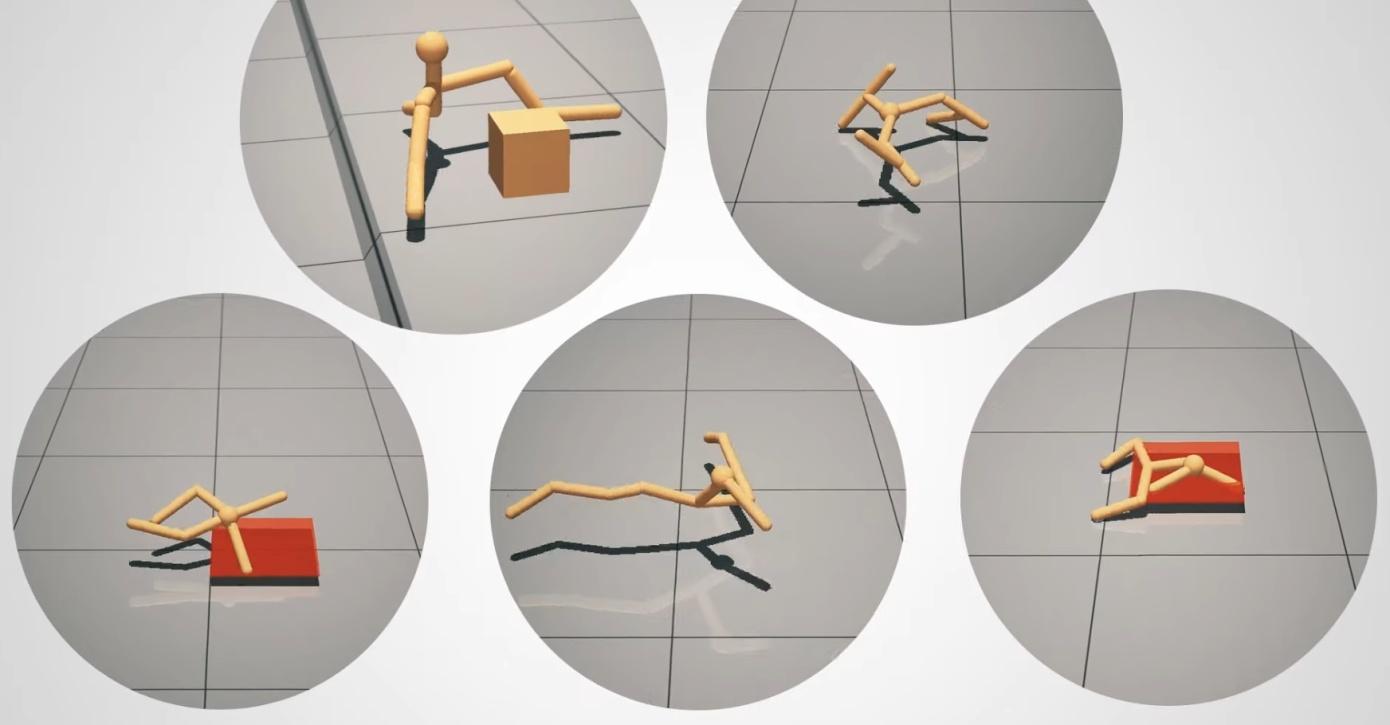
Artificial intelligence is often thought of as disembodied: a mind like a program, floating in a digital void. But human minds are deeply intertwined with our bodies — and an experiment with virtual creatures performing tasks in simulated environments suggests that AI may benefit from having a mind-body setup.
Stanford scientists were curious about the physical-mental interplay in our own evolution from blobs to tool-using apes. Could it be that the brain is influenced by the capabilities of the body and vice versa? It has been suggested before — over a century ago, in fact — and certainly it’s obvious that with a grasping hand one learns more quickly to manipulate objects than with a less differentiated appendage.
It’s hard to know whether the same could be said for an AI, since their development is more structured. Yet the questions such a concept brings up are compelling: Could an AI better learn and adapt to the world if it has evolved to do so from the start?
Mots-clés : cybersécurité, sécurité informatique, protection des données, menaces cybernétiques, veille cyber, analyse de vulnérabilités, sécurité des réseaux, cyberattaques, conformité RGPD, NIS2, DORA, PCIDSS, DEVSECOPS, eSANTE, intelligence artificielle, IA en cybersécurité, apprentissage automatique, deep learning, algorithmes de sécurité, détection des anomalies, systèmes intelligents, automatisation de la sécurité, IA pour la prévention des cyberattaques.