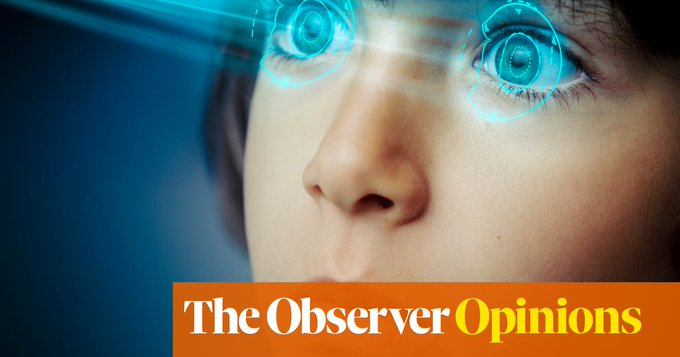
Afew days ago, a friend sent me a screenshot of an online survey sent by his children’s school and a company called ParentPay, which provides technology for cashless payments in schools. “To help speed up school meal service, some areas of the UK are trialling using biometric technology such as facial identity scanners to process payments. Is this something you’d be happy to see used in your child’s school?” One of three responses was allowed: yes, no and “I would like more information before agreeing”.
My friend selected “no”, but I wondered what would have happened if he had asked for more information before agreeing. Who would provide it? The company that stands to profit from his children’s faces? Fortunately, Defend Digital Me’s report, The State of Biometrics 2022: A Review of Policy and Practice in UK Education, was published last week, introduced by Fraser Sampson, the UK’s biometrics and surveillance camera commissioner. It is essential reading for anyone who cares about children.
Mots-clés : cybersécurité, sécurité informatique, protection des données, menaces cybernétiques, veille cyber, analyse de vulnérabilités, sécurité des réseaux, cyberattaques, conformité RGPD, NIS2, DORA, PCIDSS, DEVSECOPS, eSANTE, intelligence artificielle, IA en cybersécurité, apprentissage automatique, deep learning, algorithmes de sécurité, détection des anomalies, systèmes intelligents, automatisation de la sécurité, IA pour la prévention des cyberattaques.