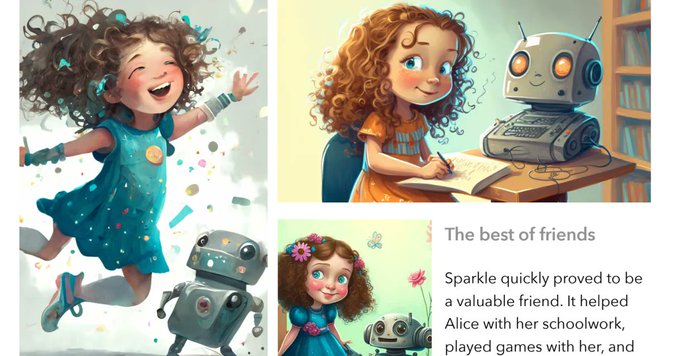
Ammaar Reshi was playing around with ChatGPT, an AI-powered chatbot from OpenAI when he started thinking about the ways artificial intelligence could be used to make a simple children’s book to give to his friends. Just a couple of days later, he published a 12-page picture book, printed it, and started selling it on Amazon without ever picking up a pen and paper.
The feat, which Reshi publicized in a viral Twitter thread, is a testament to the incredible advances in AI-powered tools like ChatGPT—which took the internet by storm two weeks ago with its uncanny ability to mimic human thought and writing. But the book, Alice and Sparkle, also renewed a fierce debate about the ethics of AI-generated art. Many argued that the technology preys on artists and other creatives—using their hard work as source material, while raising the specter of replacing them.
Mots-clés : cybersécurité, sécurité informatique, protection des données, menaces cybernétiques, veille cyber, analyse de vulnérabilités, sécurité des réseaux, cyberattaques, conformité RGPD, NIS2, DORA, PCIDSS, DEVSECOPS, eSANTE, intelligence artificielle, IA en cybersécurité, apprentissage automatique, deep learning, algorithmes de sécurité, détection des anomalies, systèmes intelligents, automatisation de la sécurité, IA pour la prévention des cyberattaques.