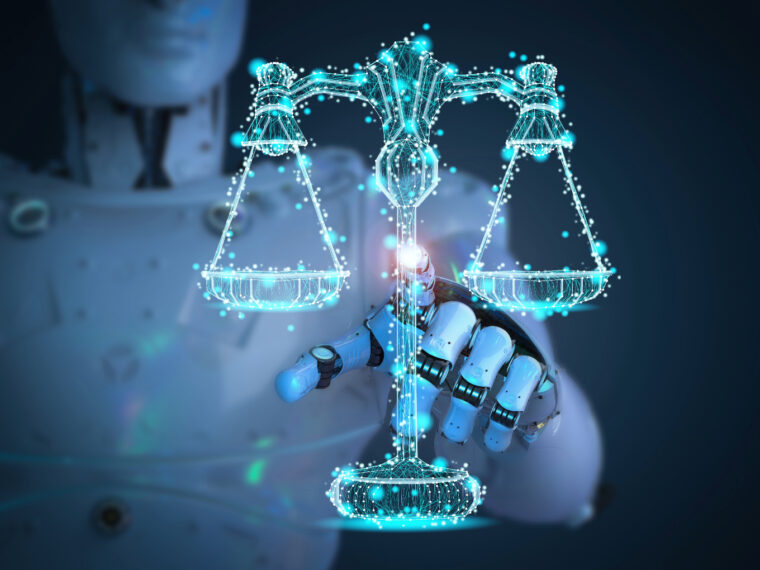
Collaborations across disciplines are growing, and artificial intelligence is helping to make joint working more effective.
Artificial intelligence (AI) is increasingly becoming a tool for researchers in other science and technology fields, forging collaborations across disciplines. Stanford University in California, which produces an index that tracks AI-related data, finds in its 2021 report that the number of AI journal publications grew by 34.5% from 2019 to 2020; up from 19.6% between 2018 and 2019 (see go.nature.com/3mdt2yq). AI publications represented 3.8% of all peer-reviewed scientific publications worldwide in 2019, up from 1.3% in 2011.
Five AI researchers describe the fruits of these collaborations, beyond journal publications, and talk about how they are helping to break down barriers between disciplines.
Mots-clés : cybersécurité, sécurité informatique, protection des données, menaces cybernétiques, veille cyber, analyse de vulnérabilités, sécurité des réseaux, cyberattaques, conformité RGPD, NIS2, DORA, PCIDSS, DEVSECOPS, eSANTE, intelligence artificielle, IA en cybersécurité, apprentissage automatique, deep learning, algorithmes de sécurité, détection des anomalies, systèmes intelligents, automatisation de la sécurité, IA pour la prévention des cyberattaques.