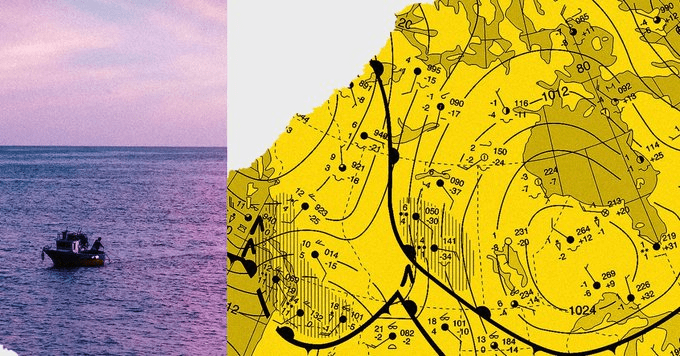
HUMANS HAVE TRIED to anticipate the climate’s turns for millennia, using early lore—“red skies at night” is an optimistic sigil for weather-weary sailors that’s actually associated with dry air and high pressure over an area—as well as observations taken from roofs, hand-drawn maps, and local rules of thumb. These guides to future weather predictions were based off years of observation and experience.
Then, in the 1950s, a group of mathematicians, meteorologists, and computer scientists—led by John von Neumann, a renowned mathematician who had assisted the Manhattan Project years earlier, and Jule Charney, an atmospheric physicist often considered the father of dynamic meteorology—tested the first computerized automatic forecast.
Mots-clés : cybersécurité, sécurité informatique, protection des données, menaces cybernétiques, veille cyber, analyse de vulnérabilités, sécurité des réseaux, cyberattaques, conformité RGPD, NIS2, DORA, PCIDSS, DEVSECOPS, eSANTE, intelligence artificielle, IA en cybersécurité, apprentissage automatique, deep learning, algorithmes de sécurité, détection des anomalies, systèmes intelligents, automatisation de la sécurité, IA pour la prévention des cyberattaques.